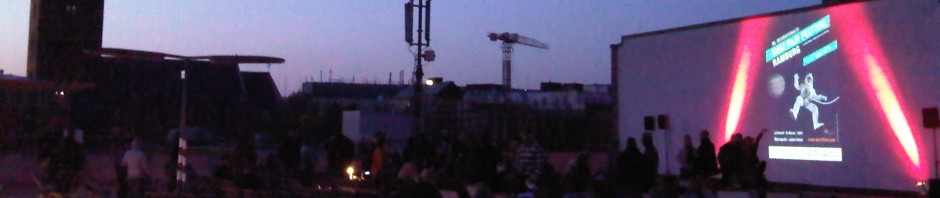
When attempting to answer the question of why film festivals exist, discussions tend to gravitate to the problem of distribution. In a competitive market that is driven by commercial objectives and molded by the aggressive strategies of major film companies, it is difficult for non-mainstream films to find theatrical distribution. Film festivals provide several “answers” to this problem. Gideon Bachmann (2000) distinguishes between “wholesale” and “retail” events: the former act primarily as markets where sales agents sell films, the latter are essentially exhibitors (cf. also Mark Peranson’s model of two kinds of festivals: business festivals and audience festivals [Peranson 2008, section 1.1]). “Wholesale” festivals revolve around the business of niche cinema markets, which is risky, but potentially lucrative when sufficiently tuned into the specific needs of “quality” products (Biskind 2004; Perren 2001, section 5). “Retail” festivals, on the other hand, fulfill a local function, showing films not (yet) available in regular theaters to people from the region. With the increasing pressure on art house exhibition and simultaneous boom in mid-sized and smaller film festivals, festivals themselves have become an alternative distribution method. Sales agents respond to the new situation by asking screening fees and revenues from ticket sales, putting added pressure on the low-budget festival organizations. In the studies below these current trends are described and evaluated. Some suggest an expansion to a “festival acquisition model,” in which films can be bought for distribution at film festivals (Bachmann 2000; Gaines 2008). Others speculate about the influence of digitalization on future distribution models (Gaines 2008; see also De Valck 2008, section 9.5).
Andrews, David. 2010. “Art Cinema as Institution, Redux: Art Houses, Film Festivals, and Film Studies.” Scope (18). https://www.nottingham.ac.uk/scope/documents/2010/october-2010/andrews.pdf. Accessed April 14, 2020.
Bachmann, Gideon. 2000. “Insight into the Growing Festival Influence: Fest Vet Discusses ‘Wholesale’ and ‘Retail’ Events.” Variety, August 28, 2000. https://variety.com/2000/film/news/insight-into-the-growing-festival-influence-1117785609/.
Berra, John. 2008. “Selective Exhibition: The Sundance Film Festival and Its Significance to the Independent Sector.” In Declarations of Independence: American Cinema and the Partiality of Independent Production, 143–60. Bristol, UK, Chicago: intellect.
Burgess, Diane. 2012. “Bridging the Gap: Film Festival Governance, Public Partners and the ‘Vexing’ Problem of Film Distribution.” CJFS 21 (1): 2–20.
Burgess, Diane, and Kirsten Stevens. 2023. “Locating Buzz and Liveness: The Role of Geoblocking and Co-Presence in Virtual Film Festivals.” In Rethinking Film Festivals in the Pandemic Era and After, edited by Marijke de Valck and Antoine Damiens, 59–80. Cham: Palgrave Macmillan.
Burgos, Sergi Mesonero. 2008. “A Festival Epidemic in Spain.” Film International 6 (4): 8–13.
Calderón Acero, Camilo Andrés. 2020. “Industria Cinematográfica Y Exhibición En Colombia: Apuntes Para Una Oferta Alternativa.” [Film Industry and Exhibition in Colombia: Notes for an Alternative Exhibition]. Mediaciones 16 (24): 8–21. https://doi.org/10.26620/uniminuto.mediaciones.16.24.2020.8-21.
Carroll Harris, Lauren. 2017. “Theorising Film Festivals as Distributors and Investigating the Post-Festival Distribution of Australian Films.” Studies in Australasian Cinema 4 (182): 46–58. https://doi.org/10.1080/17503175.2017.1356611.
Chávez Carvajal, Hugo. 2017. “Circulación Y Distribución De Cine Etnográfico En América Latina.” [Circulation and Distribution of Ethnographic Films in Latin America]. Universitas XV (27): 19–43. https://doi.org/10.17163/uni.n27.2017.01.
de Valck, Marijke. 2012. “Convergence, Digitisation and the Future of Film Festivals.” In Digital Disruption: Cinema Moves On-line, edited by Dina Iordanova and Stuart Cunningham, 117–29: St Andrews Film Studies.
Falicov, Tamara Leah. 2019. Latin American Film Industries. London, New York, NY: Bloomsbury; British Film Institute.
Fischer, Alex. 2018. “The Fully Clickable Situation: From Tyranny to Monopoly to a Filmfreeway.” In International Film Festivals: Contemporary Cultures and History Beyond Venice and Cannes, edited by Tricia Jenkins, 49–69. London, New York: I.B.Tauris.
Gaines, Christian. 2008. “State of the Fest – Part One: Do Festivals Matter?” Blog entry.
Gaines, Christian. 2008. “State of the Fest – Part Two: Things Gotta Change.” Blog entry.
Goldman, Tanya. 2017. “Brandon Films’ World Film Festival Brochure, Circa 1962.” Film History: An International Journal 29 (4): 131–56. https://doi.org/10.2979/filmhistory.29.4.06.
Gramatke, Alexandra. 2012. “Short Circuit: Ein Netzwerk Europäischer Kurzfilm- Und Videokunstverleiher: Short Circuit: A European Network of Short Film and Video Art Distributors.” [bilingual German | English]. Short Report, 24–25.
Hongisto, Ilona, Kaisu Hynnä-Granberg, and Annu Suvanto. 2020. “The Invention of Northeastern Europe: The Geopolitics of Programming at Documentary Film Festivals.” In Documentary Film Festivals Vol. 2: Changes, Challenges, Professional Perspectives, edited by Aida Vallejo and Ezra Winton, 73–91. New York: Palgrave Macmillan.
Hunter, Russ. 2022. “Capturing European Crime: European Crime Cinema at European Film Festivals.” Alphaville, no. 22: 31–41. https://doi.org/10.33178/alpha.22.02.
Iordanova, Dina. 2009. “The Film Festival Circuit.” In Film Festival Yearbook 1: The Festival Circuit, edited by Dina Iordanova and Ragan Rhyne, 23–39. St. Andrews: St Andrews Film Studies.
Isaza, Laura Rodriguez. 2012. “Branding Latin America: Film Festivals and the International Circulation of Latin American Films.” PhD Thesis, School of Modern Languages and Cultures, Centre for World Cinemas, University of Leeds. Accessed April 14, 2020. http://etheses.whiterose.ac.uk/id/eprint/3408.
Kocer, Suncem. 2013. “Making Transnational Publics: Circuits of Censorship and Technologies of Publicity in Kurdish Media Circulation.” American Ethnologist 40 (4): 721–33. https://doi.org/10.1111/amet.12050.
Kredell, Brendan. 2023. “Scarcity, Ubiquity, and the Film Festival After Covid.” In Rethinking Film Festivals in the Pandemic Era and After, edited by Marijke de Valck and Antoine Damiens, 41–58. Cham: Palgrave Macmillan.
Lecler, Romain. 2015. “Nouvelles vagues: Le marché-festival de Cannes ou la fabrique française d’un universel cinématographique.” [New Waves: The Festival-market of Cannes, or the French Making of a Cinematographic Universal]. Actes Rech. Sci. Soc., no. 206-207: 14–33. https://doi.org/10.3917/arss.206.0014.
Loist, Skadi. 2014. “Rêves transversaux: La circulation des films queer dans le réseau des festivals.” Transl. Brigitte Rollet. Diogène, no. 245: 80–103. https://doi.org/10.3917/dio.245.0080.
Loist, Skadi. 2015. “Crossover Dreams: Global Circulation of Queer Film on the Film Festival Circuits.” Diogenes 62 (1): 57–72. https://doi.org/10.1177/0392192116667014.
Loist, Skadi. 2023. “Stopping the Flow: Film Circulation in the Festival Ecosystem at a Moment of Disruption.” In Rethinking Film Festivals in the Pandemic Era and After, edited by Marijke de Valck and Antoine Damiens, 17–40. Cham: Palgrave Macmillan.
Martinek, Přemysl. 2014. “Jsou Filmové Festivaly Skutečně Platnou Distribuční Platformou? Instituce Filmového Festivalu Pohledem Distributora ‘Festivalových’ Filmů.” In “Filmove Festivaly | Film Festivals.” edited by Jindřiška Bláhová. Special issue, Iluminace: časopis pro teorii, historii a estetiku filmu = Journal for Film Theory, History, and Aesthetics 26. (1): 49–63. [Are Film Festivals Truly a Valid Platform for Distribution? The Institution of Film Festivals from the Perspective of the Distributor of ‘Festival’ Films.].
Mudhar, Raju, and Andrew Bailey. 2018. “We Tracked Every Film That Played TIFF in 2017: Here’s What We Found.” The Star, September 2, 2018. https://www.thestar.com/entertainment/tiff/2018/09/02/we-tracked-every-film-that-played-tiff-in-2017-heres-what-we-found.html.
Murray, Virginia, and Katya Johanson. 2015. “The Cut-Through Concept: 52 Tuesdays, Festivals and the Distribution of Independent Australian Films.” Studies in Australasian Cinema 9 (1): 52–65. https://doi.org/10.1080/17503175.2014.1002270.
Peirano, María Paz. 2017. “Ethnographic and Indigenous Film Festivals in Latin America: Constructing Networks of Film Circulation.” In Film Festivals and Anthropology, edited by Aida Vallejo and Maria-Paz Peirano, 73–87. Cambridge: Cambridge Scholars Publishing.
Pollacchi, Elena. 2019. “Porous Circuits: Tsai Ming-Liang, Zhao Liang, and Wang Bing at the Venice International Film Festival and the Interplay Between the Festival and the Art Exhibition Circuits.” Journal of Chinese Cinemas 13 (2): 130–46. https://doi.org/10.1080/17508061.2019.1665239.
Richards, Stuart, and Lauren Carroll Harris. 2021. “From the Event to the Everyday: Distributor-Driven Film Festivals.” Media International Australia 180 (1): 91-100. https://doi.org/10.1177/1329878X20938479.
Roddick, Nick. 2009. “Coming to a Server Near You: The Film Festival in the Age of Digital Reproduction.” In Film Festival Yearbook 1: The Festival Circuit, edited by Dina Iordanova and Ragan Rhyne, 159–67. St. Andrews: St Andrews Film Studies.
Rodríguez Isaza, Laura. 2014. “De ‘gira’ por los festivales: Patrones migratorios del cine latinoamericano. [Touring the Film Festival Circuit: Migrating Patterns of Latin American Cinema].” In “Festivales Cinematográficos [Film Festivals].” edited by Aida Vallejo. Special issue, Secuencias: Revista de Historia del Cine. (39): 65–82.
Slováková, Andrea. 2020. “Connecting Festivals, Distributing Films: An Interview with Diana Tabakov, Acquisitions Manager at Doc Alliance Films VOD Platform.” In Documentary Film Festivals Vol. 2: Changes, Challenges, Professional Perspectives, edited by Aida Vallejo and Ezra Winton, 201–10. New York: Palgrave Macmillan.
Stevens, Kirsten. 2011. “Fighting the Festival Apocalypse: Film Festivals and Futures in Film Exhibition.” Media International Australia, Incorporating Culture & Policy (139): 140–48.
Stevens, Kirsten. 2012. “Moving with the Times: D-Cinema and DCP Festivals.” Studies in Australasian Cinema 6 (3): 279–89.
Su, James Yantao. 2015. “Chinese American Film Festival Establishing a Maritime Silk Road Between the East and West.” Int. Commun. Chin. Cult 2 (1): 93–98. https://doi.org/10.1007/s40636-015-0015-0.
Tryon, Chuck. 2013. “Reinventing Festivals: Curation, Distribution, and the Creation of Global Cinephilia.” In On-Demand Culture: Digital Delivery and the Future of Movies, 155–72. Piscataway: Rutgers University Press.
Vallejo, Aida. 2014. “Industry Sections: Documentary Film Festivals Between Production and Distribution.” Iluminace 26 (1): 65–81.
Vallejo, Aida. 2015. “Documentary Filmmakers on the Circuit: A Festival Career from Czech Dream to Czech Peace.” In Post-1990 Documentary: Reconfiguring Independence, edited by Camille Deprez and Judith Pernin, 171–87. Edinburgh: Edinburgh University Press.
Vallejo, Aida. 2017. “L’impact Économique Des Festivals De Cinéma: Entre La Communauté Cinéphile Et L’industrie Audiovisuelle.” [The Economic Impact of Film Festivals: Between the Cinephile Community and the Audiovisual Industry]. Les cahiers de Champs Visuels (14/15): 61–98.
Vallejo, Aida, and Christel Taillibert. 2023. “Finding Allies in Pandemic Times: Documentary Film Festivals and Streaming Platforms.” In Rethinking Film Festivals in the Pandemic Era and After, edited by Marijke de Valck and Antoine Damiens, 101–27. Cham: Palgrave Macmillan.
Vannucci, Enrico. 2014. “A Rising Wave: An Analysis of the Ecosystem, Policies and Practices of the Contemporary Italian Short Film Festivals.” Cinergie (6): 25–33. http://www.cinergie.it/?p=4923. Accessed April 14, 2020.
Vieira, Mariella Pitombo, and Milene de Cássia Silveira Gusmão. 2017. “O Mercado Audiovisual Brasileiro, O Circuito Alternativo De Exibição, as Mostras E Festivais De Cinema Na Bahia Contemporânea.” [The Brazilian Audiovisual Market, Alternative Circuit of Exhibition, Shows and Movie Festivals in Contemporary Bahia]. Ciências Sociais Unisinos 53 (1). https://doi.org/10.4013/csu.2017.53.1.04.
(Last updated: 11. April 2024)